
Is Juvenile Life Without Parole “Cruel and Unusual Punishment” That Violates the Eighth Amendment?
By Courtney Bailey
Georgia, Michigan, Alabama, and Mississippi say yes to JLWOP, doubling down on the harsh sentence for minors, while states like Minnesota are rolling it back following SCOTUS rulings that say mandatory life shouldn’t be an option for minors
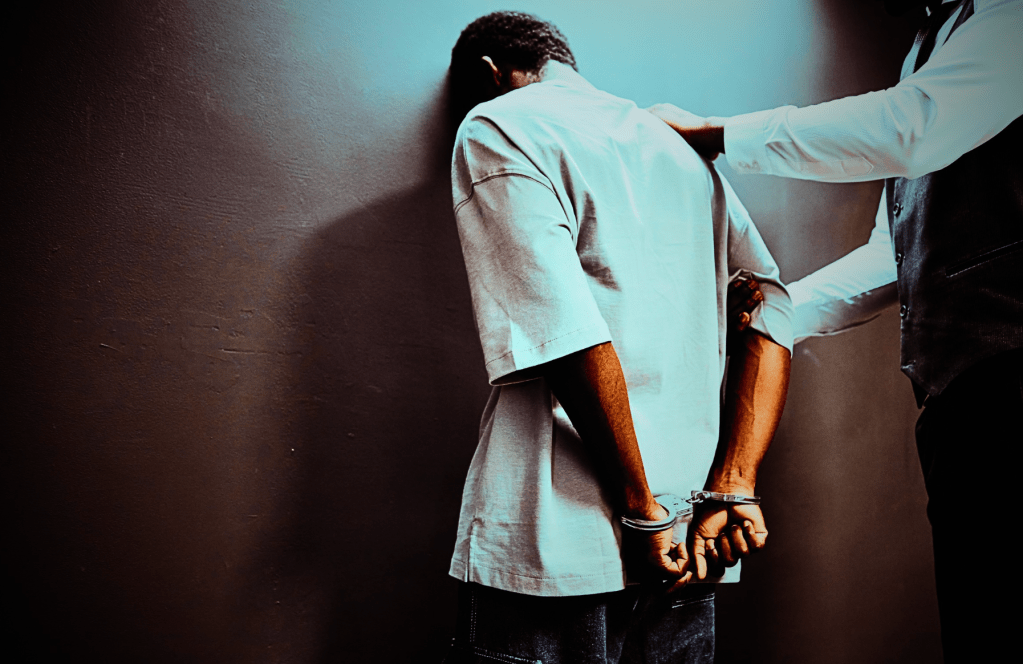
In 2023, 14-year-old Parise Larry was involved in a shooting that cost 20-year-old Tatyanna Zech her life and put two others in the hospital. It was never determined whose bullet caused Zech’s death. In December, Larry and his co-defendant, also a juvenile at the time, were tried as adults and sentenced to life in prison without parole.
Sentencing juveniles to life in prison without parole (JLWOP) is a practice many states are now banning. Some states, such as Iowa, have said this decision is because JLWOP sentences are a violation of their state constitution; while other states, such as California, have banned it based on Supreme Court rulings that cite the U.S. Constitution’s 8th Amendment, which bans “cruel and unusual” punishment. Minnesota is the most recent state to ban JLWOP in May 2023. However, proponents of JLWOP feel that it can be a valid use of judicial discretion when the crime warrants it and continue to support its use in sentencing.
U.S. states are split on how to handle JLWOP.
Download the article below
Proponents vs. Opponents
There are still many states that have not banned JLWOP, and struggle with the decision, citing public safety as the primary reason. Steve Hayes, Georgia’s State Parole Board Communication Director, was quoted, stating that while “age at the crime commit date is undoubtedly a significant factor…it isn’t and shouldn’t be the reason to release an individual into the community.” Pete Skandalakis, the Executive Director of the Prosecuting Attorneys’ Council of Georgia, who was quoted in the same article, said that while he thinks it is tragic that some juveniles may be receiving a life without parole (LWOP) sentence, it “doesn’t negate the fact that the judge may have found the factors that he or she had to sentence somebody to life without parole.”
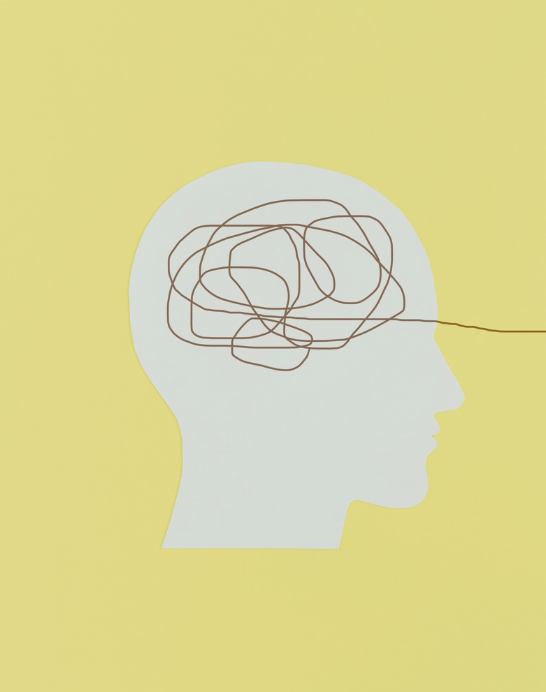
On the opposing side, many feel that putting a minor in prison without parole is an 8th Amendment violation. Developments in adolescent psychology have given society more insight into teenagers, their thinking processes, and impulsivity. Laurence Steinberg, a professor of psychology specializing in adolescents, has authored several papers that are considered groundbreaking in their field, discussing the neurological reasons for risk-taking in teens, peer influence on decision-making, and the impact of the reward-processing system.
The difference…is that for teenagers, immaturity and social influences take over the brain in a way that an adult is more able to control.
Essentially, Steinberg notes in his “A Social Neuroscience Perspective on Adolescent Risk-Taking” paper that there is no cognitive difference between teenagers and adults when it comes to risk-taking — a 14-year-old knows murder is wrong in the same way a 35-year-old does. The difference, he points out, is that for teenagers, immaturity and social influences take over the brain in a way that an adult is more able to control.
“[For juveniles] In the presence of peers or under conditions of emotional arousal…the socio-emotional network becomes sufficiently activated to diminish the regulatory effectiveness of the cognitive control network,” Steinberg stated.
The American Psychological Association (APA) has filed several amicus briefs over the years that include these developments. Many of these briefs argue that locking a juvenile away for life without parole does not align with research that shows age and maturity can improve choicemaking, with Steinberg, a Temple University psychology professor who was the lead scientist for the Graham v. Florida amicus brief, saying, “it’s not possible to predict the likelihood of future violent offending in a reliable way.”
The Supreme Court, based on the APA’s briefs, noted in Miller v. Alabama,1 that teenage years are marked by “transient rashness, proclivity for risk, and inability to assess consequences.” In Montgomery v. Louisiana,2 the Court added that “children are constitutionally different from adults in their levels of culpability.”
Joshua Rovner, a senior research analyst of The Sentencing Project, a nonprofit that seeks to minimize the imprisonment and criminalization of youth and adults, echoed similar sentiments. Rovner said in an interview with the ONU Civil Rights Law Journal that it is “illogical to say that we know for sure that people who do horrible things before they’re eighteen are just destined to be horrible.” He added that from an 8th Amendment perspective, the cruelty of this punishment comes from a predetermination that minors, whose brains are not even fully developed yet, “have no reason to hope for release.”
A 2024 National Library of Science recidivism study of “juvenile lifers” backs Rovner’s sentiment stating in their conclusion that “…even the commission of heinous crimes does not mean that the individual is irretrievably depraved or beyond redemption.”
How We Got Here and Judicial Discretion
Several court decisions in the last two decades have addressed juvenile sentencing in homicide cases. In 2005, in Roper v. Simmons,3 the Supreme Court struck down the use of the death penalty for people under 18. Five years later, in Graham v. Florida4 the Supreme Court ruled that life without parole sentences for people under 18 could be used only for homicide crimes. The Court noted in this case that life without parole was “an especially harsh punishment for a juvenile,” pointing out that a 16-year-old and a 75-year-old both being sentenced to life in prison “receive the same punishment in name only” since “juvenile offenders will on average serve more years and a greater percentage of his life in prison” compared to an older offender.

Miller v. Alabama5 followed, and the Supreme Court ruled that life without parole cannot be a mandatory sentence for a juvenile, regardless of the crime. The Court reasoned in this case that mandatory penalties prevent the judge from taking mitigating circumstances into account, such as the juvenile’s background, mental and emotional development, and their maturity. This decision gave a lot of power to judges to use their discretion in sentencing, deciding what the best punishment for a juvenile convicted of a homicide crime may be while looking at the totality of the circumstances.
In 2016, in Montgomery v. Louisiana,6 the Supreme Court said that the ruling in the Miller case should apply retroactively, opening the door for those currently serving JLWOP sentences to apply for a resentencing. The Court noted that JLWOP, the most severe punishment available for juveniles, should be reserved “for the rarest of juvenile offenders, those whose crimes reflect permanent incorrigibility.” The Court did not define what may make a juvenile permanently incorrigible, only that these offenders are rare. This sentiment is supported by the 2024 National Library of Medicine recidivism study and is, according to the study, “consistent with the ‘age–crime curve’—which shows that criminal behavior tends to peak in late adolescence before declining.”

A few years after Montgomery, the Court heard Jones v. Mississippi,7 a case in which the defendant had applied to have his sentence re-heard, but was again sentenced to life without parole. The Defendant in this case claimed that the court had no finding of “permanent incorrigibility,” as was specified in 2016. The Supreme Court responded that a specific finding of “permanent incorrigibility” was not needed to sentence someone to JLWOP. When asked about this case, Rovner of The Sentencing Project said that this decision affirmed all past decisions made by the Court with a significant majority, but “it seemed like the Court was saying ‘this is as far as we’re willing to go.’”
The several court cases discussed above were the catalyst for many states in banning JWLOP sentences. You can see which states have banned JLWOP, or if there is anyone in the state serving a JLWOP sentence, here.
Disproportionate Use of JLWOP by State and Race
While progress has been made on banning JLWOP sentences, there is also evidence that, because of the judicial discretion allowed, it is being used unevenly across the U.S. For example, according to a census conducted by the Campaign for the Fair Sentencing of Youth (CFSY), a third of all JLWOP sentences since 2012 have been in just four states — Georgia, Michigan, Mississippi, and Alabama. Michigan has the largest population of people serving JLWOP in the country, while Georgia has imposed a JLWOP sentence more than any other state in the country post-Miller.
The CFSY notes that there were many who were sentenced to juvenile life without parole who asked for resentencing hearings as a result of Miller, but as of 2024, over two-thirds of those serving JLWOP have been waiting for that hearing for twelve years. In Michigan, 74% of those waiting for resentencing are Black. JWLOP sentences being handed down post-Miller have also been used disproportionately against Black children in new cases, with 77% of those who receive a JLWOP sentence being Black.
Often, when a juvenile receives a LWOP sentence, it is because he or she is tried in adult court and given an “adult” sentence. Things such as mandatory transfer laws and prosecutorial or judicial discretion make it possible for juveniles to be tried and sentenced in adult court. For example, in South Carolina, juveniles are usually tried in family court. A family court judge, however, can waive jurisdiction, which transfers the juvenile to adult criminal court, where the juvenile faces adult sentences.
While transferring a juvenile case to adult court does not automatically result in a JLWOP sentence, it is a loophole that is used to impose an LWOP sentence on juveniles. Parise Larry, who was 14-years-old when he committed a homicide, was automatically transferred to adult court because he was over the age of 10 and charged with first-degree murder. First-degree murder is a Class A felony in Wisconsin, where Larry was charged. The penalty for a Class A felony in Wisconsin is life imprisonment. The adult court judge declined to give Larry, a minor, the chance for parole.
The inconsistency across the U.S. in charging and sentencing juveniles to life in prison without parole needs to be addressed nationally as a uniform issue that may violate the 8th Amendment. Some states have acknowledged that the unfair and increasingly uncommon use of JLWOP sentences is unusual, and based on recent developments in adolescent psychology, putting a juvenile in prison for the rest of their lives with no hope of release should be considered cruel. These states have banned JLWOP’s use. It’s time for states that have not yet banned this practice to follow their example.
What You Can Do
When asked the best way to make a difference in states where JLWOP has not been banned, Joshua Rovner of The Sentencing Project recommends reaching out to state legislatures here. To see the latest JWLOP numbers visit here. For additional information on JLWOP, visit here.
Endnotes
1 Miller v. Alabama, 567 U.S. 460, 472 (2012).
2 Montgomery v. Louisiana, 577 U.S. 190, 206 (2016).
3 Roper v. Simmons, 543 U.S. 551 (2005).
4 Graham v. Florida, 560 U.S. 48, 70 (2010).
5 Miller v. Alabama, 567 U.S. 460 (2012).
6 Montgomery v. Louisiana, 577 U.S. 190, 209 (2016).
7 Jones v. Mississippi, 593 U.S. 98 (2021).
* Denotes links requiring a subscription
Suggested Citation
Bailey, Courtney, Locked Away for Life: Is Juvenile Life Without Parole “Cruel and Unusual Punishment” That Violates the Eighth Amendment? (June 16, 2026). Ohio Northern University Civil Rights Law Journal. Available at https://onucrjournal.com/2026/06/16/locked-away-for-life/.
 Ohio Northern University
Leave a comment