
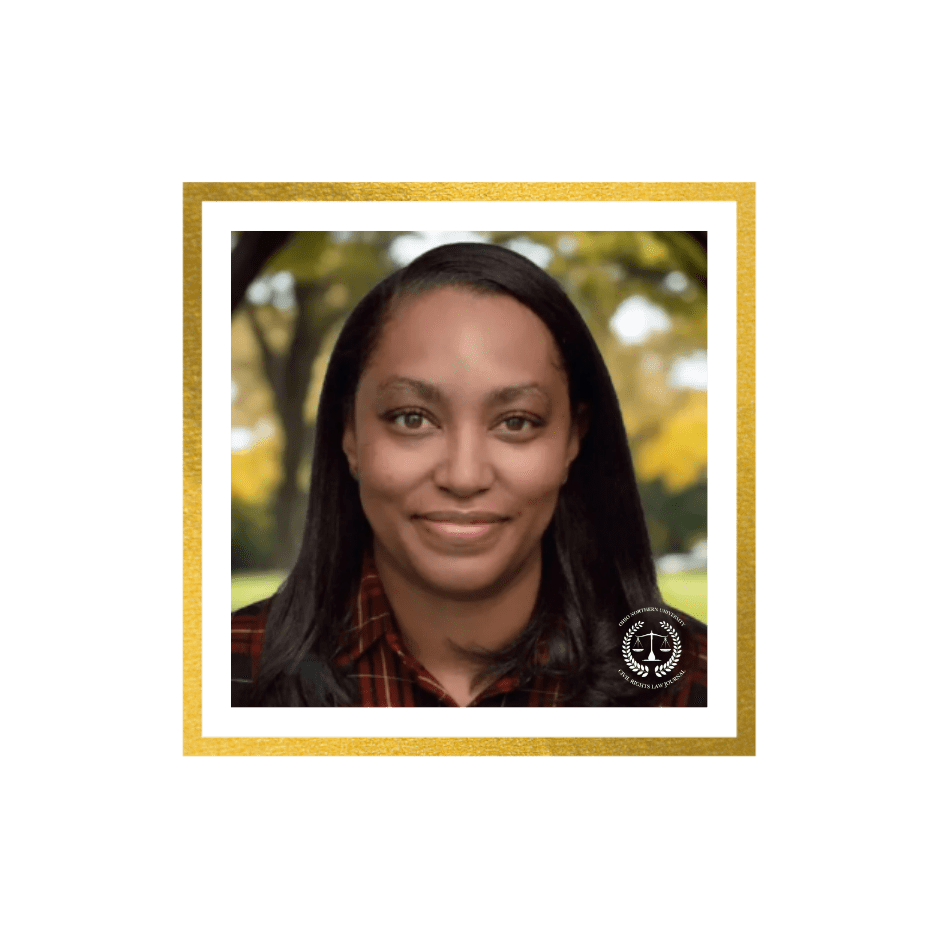
The Civil Rights Law Journal organization welcomes first board president following reboot
By Steph West
The Ohio Northern University Civil Rights Law Journal organization welcomes its first executive board president, Titice Beverly, following a reboot of the club’s associated Journal, a digital-first publication covering the intersectionality of all areas of the law with civil rights issues.
The Journal began as a publication-only organization, but has evolved under the reboot to include two arms: an organization that operates the business and events side and does not require members to write for the Journal, and the publication side, which is composed of writers and editors.
An executive board runs the CRLJ organization; the publishing team runs the CRLJ publication. Beverly, a 2L at ONU law school set to graduate in 2028, was appointed as the organization’s executive board president. She is also a writer for the CRLJ publication.
Beverly was born and raised in Los Angeles, California, before serving more than 10 years in the United States Air Force as a paralegal. There she gained valuable experience in criminal, administrative, international and civil law.
“My military service also taught me lessons such as resilience, the importance of standing up for others,” Beverly said. She has also worked for the Los Angeles County Sheriff’s Department, the U.S. Small Business Administration, and the Superior Court of California.
“After law school, I plan to practice civil rights, family and probate law,” Beverly said. “I believe everyone deserves a fair opportunity to grow, succeed and reach their dreams. I also believe families deserve a strong, compassionate advocate during the most challenging moments in their lives.”
The Journal took a moment to catch up with Beverly and learn her vision for the executive board and the CRLJ organization. Read her Q&A below:
1. Congrats on being the new President for the CRLJ organization executive board. Tell us what made you want to step into this leadership role?
Civil Rights have always been a fundamental part of my life and journey towards becoming an attorney. The rights and freedoms established through the Civil Rights Movement have opened certain doors that would otherwise be closed. My ability to pursue a law degree, my ability to become president of the CRJL would not have been possible without the sacrifices of so many people in the Movement. Because of that, I feel a personal responsibility to understand the history of the Movement, recognize the progress that was made, and continue that work today.
I wanted to step into the leadership role with the CRLJ to learn. I believe leadership begins with a willingness to learn. As Board President, I hope to educate not only others, but myself, about the challenges that communities continue to face, and the ways the movement is evolving to address those challenges. Civil Rights will continue to develop as our society changes.
I hope to use this position to encourage meaningful conversations, promote education, and remind others that protecting civil rights is an ongoing responsibility. No one should be left behind. I believe that the CRLJ can play an important role in making sure that everyone understands the history and the work that remains ahead.
2. Why is the CRLJ organization important to both the ONU campus and generally for our society?
The CRLJ is important to the ONU campus because it creates a safe and welcoming environment. Individuals can come together, learn from each other, and have a meaningful conversation about civil rights, equality and social justice. There is so much happening around us, it’s important for individuals to have an organization that encourages education, awareness and an open dialogue about issues that affect our communities.
In general, the CRLJ gives individuals an opportunity to understand the history behind the rights and freedoms we have, while also recognizing the challenges we still face. It encourages us to think critically about fairness, equality, and the responsibility we have to one another. The CRLJ also reminds us that creating a more equitable society requires continued education, conversation, and empathy.
3. What are your goals for the CRLJ executive board over the next year?
Over the next year, the CRLJ’s main goal is to increase awareness of the organization. Our mission is to highlight, discuss, inform, and educate on civil rights, civil rights law, and the intersection of civil rights with other areas of law including employment, housing, criminal justice, and more.
4. Do opportunities exist for ONU students to be part of the CRLJ organization without being a writer?
The CRLJ welcomes both full-time and part-time ONU law students, as well as undergraduate Pre-law students, who maintain a minimum 2.0 GPA. There are many roles in the organization, and being a writer isn’t a requirement.
The CRLJ has an Executive Board that helps manage the organization’s day-to-day operations, including planning events, organizing programs, fundraising and creating opportunities for students to engage with civil rights issues. At the same time, our Journal publishing team focuses on legal research, interviews, and publishing articles.
I understand that writing or legal research can feel intimidating, because I had those same concerns, and still do, when I first became involved. However, one of things we want to create in the organization is an environment with no pressure. Whether you want to take on a leadership role, help with events and fundraising, contribute to the Journal as a writer or editor, or something else, there will be a place for you.
The CRLJ is about creating opportunities for students to learn, connect, and contribute in whatever capacity works best for you. You don’t have to be a writer to make a meaningful impact within the CRLJ.
5. When it comes to civil rights, what is the one piece of wisdom you want to impart and impress on readers?
You are never alone. Civil rights affect all of us, and the more willing we are to talk about these issues, and listen and learn from these different experiences, the better our communities will become. This may sound cliché, but I truly believe that creating a space for everyone to be seen, heard, and respected can make a difference. Conversations about civil rights can sometimes feel uncomfortable or overwhelming, but these conversations are necessary. We can create spaces where individuals feel supported and empowered to speak, learn, and participate.


Leave a Reply